To mark the launch of our report on healthcare worker migration to Australia, we are publishing a series of contributions from organisations and practitioners working with internationally qualified health professionals in communities across Australia.
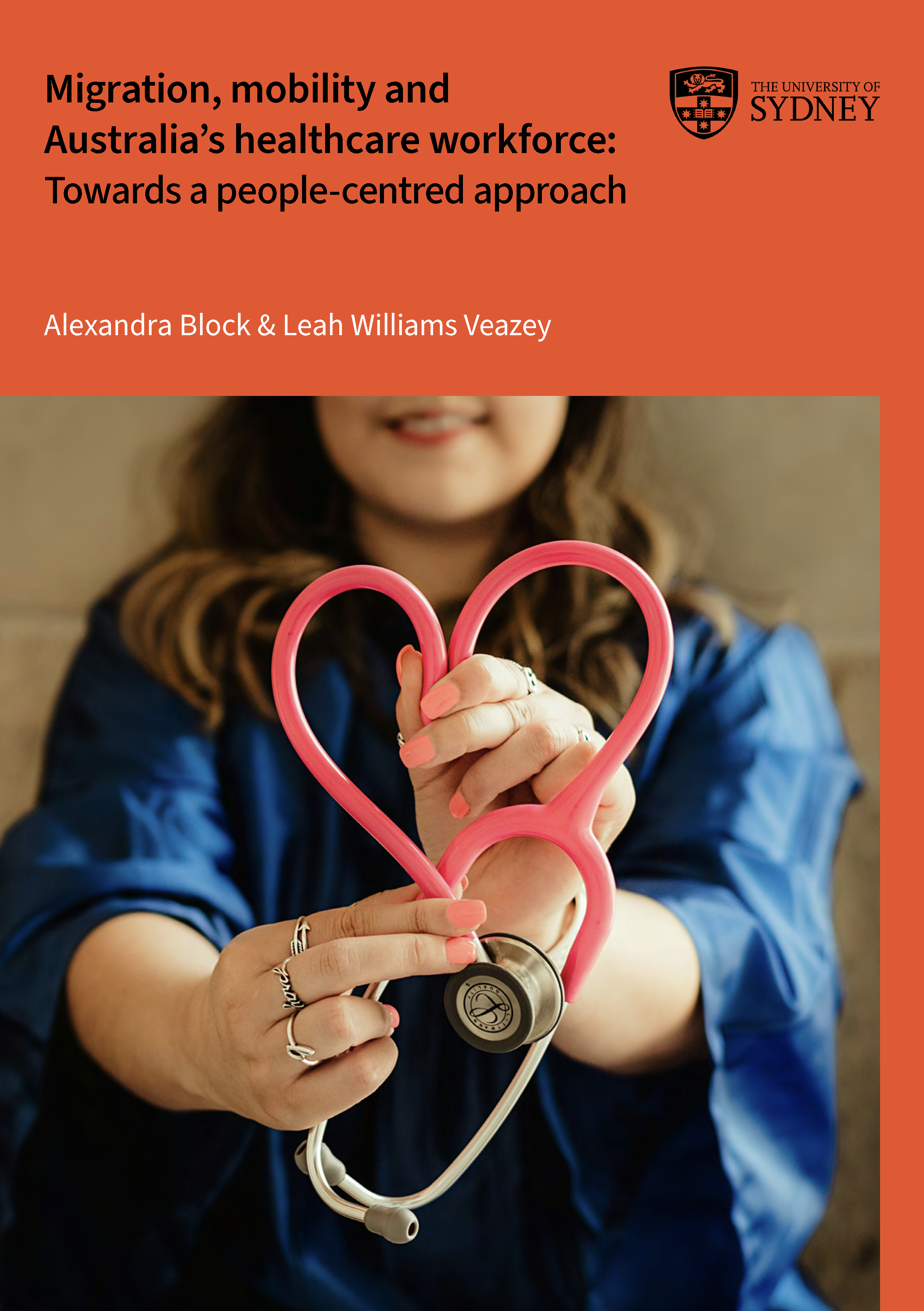
The front cover of the Migration, mobility and Australia’s healthcare workforce report.
The report presents the findings from the Networks of Care research project. It foregrounds the voices of internationally qualified health professionals who have migrated to Australia (or plan to do so), alongside the perspectives of experienced industry professionals working in settlement services, migration policy, workforce and employment. It outlines the tensions and challenges faced by people as they seek to answer Australia's call for qualified migrants to staff our healthcare services.
“I want to be in a place where my income is protected, my family is safe, I’m happy doing what I love.”
Some of these tensions are well-known, from complex, expensive and lengthy professional registration processes and uncertainty about visa pathways, to the undervaluing of migrants' skills and expertise. In this report, however, we emphasise the ways these challenges interact with health professionals' family, community and professional relationships. This is part of a wider 'relational mobilities' approach that frames the report.
The Australian healthcare system is globally connected via the movement of people, money, skills, knowledge, emotion, objects, care and more. And the people who work in it are much more than just workers. Skilled migration is much more than an economic process; it is also a relational and settlement process. Healthcare workers are deeply embedded in families, communities, care relationships and other connections, and these connections shape their migration decisions and experiences. Long-term workforce participation and successful settlement depends upon whether people are able to build sustainable and meaningful lives in communities and workplaces, while also maintaining their connections to family, friends and places overseas.
“If the family has just moved here, they don’t know about the schools, so you need to provide some information about what the schools are in the area. Employers can do this, and that builds a sense of connection and belonging for that employee and their desire to stay within that workforce and workplace, because they feel like that workforce has understood them as a whole person and the needs of their family as well.”
Over the next few days, we will be showcasing the work of a range of organisations working with healthcare workers in Australia and exploring what the report means to them. First up, we have the perspective of the Settlement Council of Australia…